Musėkautas

Vabzdžiaėdžiai augalai ir jų aplinka – Carnivorous plants and their habitats

.LT

At the start of the twenty first century, approximately 120 species of Nepenthes have been discovered across the Old World continents. The overwhelming majority of species within this genus occur exclusively in South East Asia with the greatest diversity to be found on the great islands of Borneo and Sumatra. Generally Nepenthes sp. occur across relatively limited geographical ranges, and in some cases, individual species are found on just one or two mountain peaks. Outside South East Asia seven species are known to occur. Of these N. mirabilis is by far the most populous, being distributed from Hong Kong and continental China to the northern tip of Australia and across most of the islands in between. N. mirabilis is the most widely distributed of all tropical pitcher plants and represents the exception in the genus.

N. pervillei growing on Mahé Island, Seychelles

N. pervillei growing on Mahé Island, Seychelles

Skaityti toliau…

.LT

The beginning of the twentieth century represents an age of discovery and exploration – a time when our picture of the Earth remained incomplete and still filled with the unknown. The Guiana Highlands of Venezuela, northern Brazil and Guyana lay at the forefront of the minds of explorers – a remote land dominated by immense sandstone plateaus very few of which had been climbed, explored or even named.

The Immense Cliffs of Mount Roraima

The Immense Cliffs of Mount Roraima

Indeed even as World War Two raged in Europe, the gigantic mountain range of Neblina which stands over three kilometers tall, had not even been discovered. The Guiana Highlands remained a blank on the map.

Skaityti toliau…

.LT

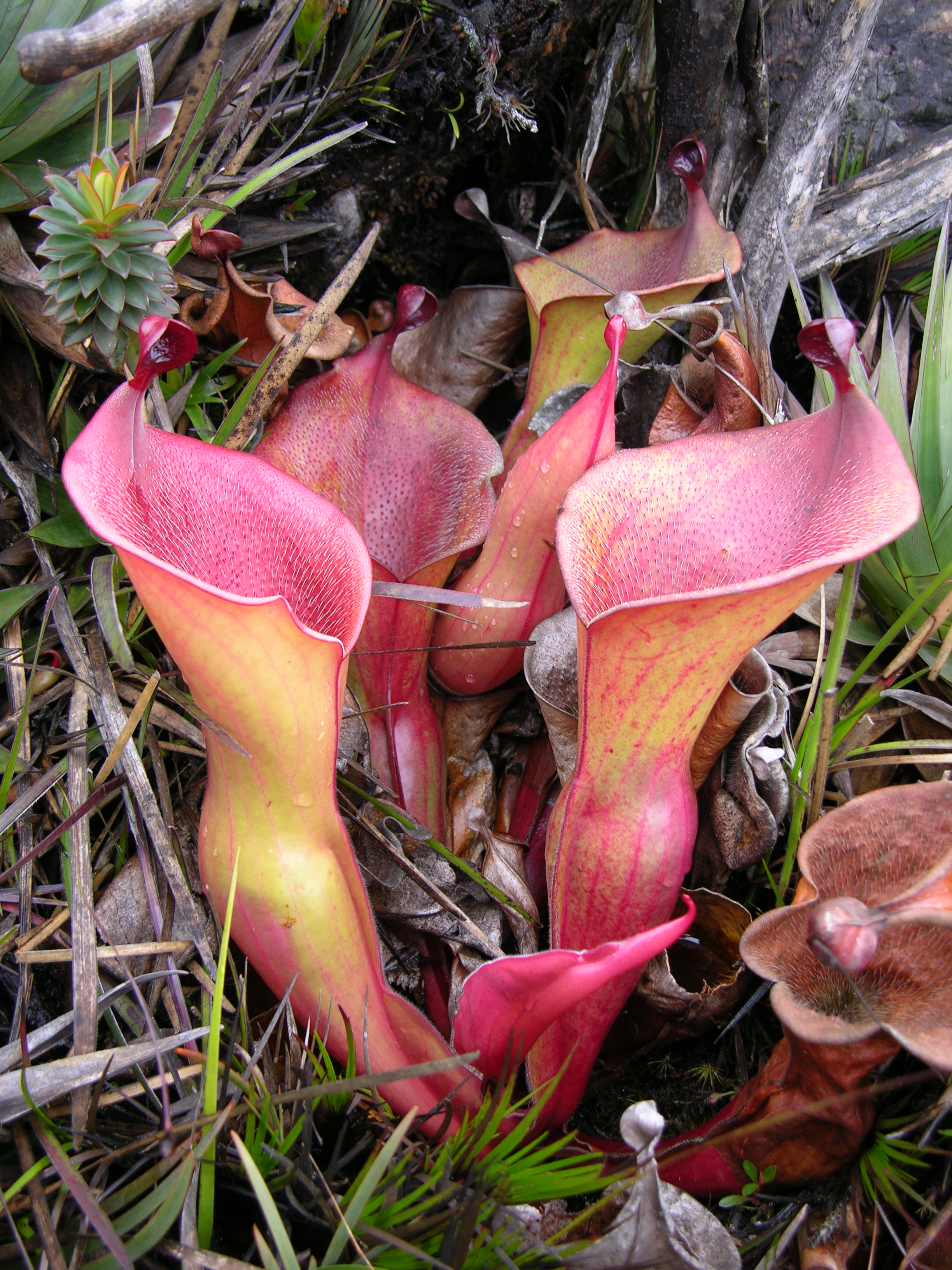
In 1978, Basset Maguire described two new species of marsh pitcher plants based on the findings of several expeditions to the Guiana Highlands of Venezuela, Guyana and Brazil which he and various colleagues at the New York Botanical Garden led during the 1950s, 1960s and 1970s.

Skaityti toliau…

.LT

During 1838 and 1839, the celebrated German cartographer Robert Schomburgk was dispatched by the British Government to travel to the remote interior of the colony of British Guyana (now Guyana) to map the remote borders of the province and to survey the topography and geology of the territory. During the early 19th century, the colonial government’s understanding of the interior of British Guyana was imprecise. Several explorers had traveled through the area during the previous three centuries and returned with reports of a mysterious country dominated by towering mountains and pinnacles but the information that existed was vague and often difficult to believe. In 1595 Sir Walter Raleigh had reported an immense spire that resembled a ‘white church tower’ and in 1780 Capuchin Mariano (a Spanish missionary) described looming mountains that resembled ‘enormous towers and castles’.

For seven months, Schomburgk journeyed through the jungles and savannahs of British Guyana towards the remote heart of the Guyana Highlands. From afar, he beheld Mount Roraima an immense vertical sided plateaus on the border of what is now Venezuela, Guyana and Brazil. In his journal he recorded

I remained amazed looking at the gigantic thick wall and dominated by a sensation of almost grievous oppression… looking at this giddy height, the rocky mass seemed savage and tremendous.

Skaityti toliau…

EN

.

Naujas tuklės hibridas – Pinguicula ‘Nataly’ (neoficialus pavadinimas)

David Svarc (2012)

2009-ųjų metų liepą buvo atliktas dviejų Meksikos tuklių rūšių abipusis kryžminimas. Sukryžmintos Pinguicula medusina ir  P. moranensis (Huixteco, Mexico).

Daigias sėklas subrandino tik apdulkinta P. moranensis (Huixteco, Mexico),  P. medusina sėklų neužmezgė (greičiausiai nepavyko apdulkinimas).

Po trijų metų džiaugiuosi galėdamas pristatyti naują P. moranensis (Huixteco, Mexico) x P. medusina hibridą, kuris kol kas neoficialiai pavadintas Pinguicula ‘Nataly’ .

Pinguicula 'Nataly'

Pinguicula 'Nataly'. David Svarc, 2012

LT

.

New hybrid of Pinguicula – working title Pinguicula ‘Nataly’ (unofficial)

David Svarc (2012)

In July 2009 I made a bilateral cross-pollination of the Mexican Pinguicula species – Pinguicula medusina and P. moranensis (Huixteco, Mexico).

Ripe seeds were harvested from P. moranensis (Huixteco, Mexico), whereas the pollinated P. medusina did not produce seeds (probably failed to flower pollination).

Three years after I have the oportunity to introduce a new hybrid, which I present with the working title Pinguicula ‘Nataly’ – P. moranensis (Huixteco, Mexico) x P. medusina.

Pinguicula 'Nataly'

Pinguicula 'Nataly'. David Svarc, 2012

Žali horizontai’2012

Dar vieni metai – dar viena paroda. 2012-taisiais Žali horizontai taip pat vyko prekybos ir pramogų centre „Mega”, Kaune. Šiemet paroda mėnesiu vėlesnė (gegužės 18-20 d.). Turbūt tai galėjo įtakoti ir gerokai gausesnį eksponatų skaičių. Bent jau pelkėje jų netrūko.

Šįkart pelkė gavo vardą – „Laumių dauba”. Visa ekspozicija buvo pakelta šiek tiek nuo žemės, išdėstyta suolo aukštyje.

Viduryje, dauboje telkšojo rūke paskendęs akivaras. Aplinkui, kiek aukščiau, kiminų, miško samanų, kerpių, kelmų apsuptyje buvo išdėstyti vabzdžiaėdžiai augalai, kiti pelkių floros atstovai.

Geresnėms ekspozicijos augalų buvimo parodoje sąlygoms užtikrinti ir estetinaiis sumetimais buvo panaudoti net trys šalto rūko generatoriai. Vienas jų – centrinėje dauboje, kiti du leido žemyn rūką iš ekspozicijos kraštų.

Gausesnis buvo ir rūšių sąrašas:

Saulašariniai

  • Jautrusis musėkautas – Dionea muscipula (žydintis),
  • Kapo saulašarė – Drosera capensis (žydinčios raudonlapė ir baltalapė formos),
  • Alicijos saulašarė – Drosera aliciae,
  • Apskritalapė saulašarė – Drosera rotundifolia,
  • Šaukštalapė saulašarė  – Drosera spatulata  (žydintis),
  • Raguotoji saulašarė – Drosera binata.

Saracėnijiniai

  • Raguotoji saulašarė

    Gražiausiu vabzdžiaėdžiu organizatoriai išrinko Raguotąją saulašarę (Drosera binata)

    Kaliforninė darlingtonia – Darlingtonia californica  (žydinti),

  • Melsvalapė saracėnija – Sarracenia leucophylla  (žydinti),
  • Purpurinė saracėnija – Sarracenia purpurea,
  • Papūginė saracėnija – Sarracenia psittacina,
  • Keletas saracėnijų hibridų – Sarracenia hybr.

Ąsoteniniai

  • Sparnuotasis ąsotenis – Nepenthes alata,
  • Nepenthes albomarginata,
  • Ąsotenių hibridai – Nepenthes hybr.

Skendeniniai

  • Morano tuklė – Pinguicula moranensis,
  • Ehlers tuklė – Pinguicula ehlersiae,
  • Jaumavo tuklė – Pinguicula jaumavensis   (žydinti),
  • Pinguicula moctezumae (žydinti),
  • Pinguicula gracilis x moctezumae (žydinti)
  • Paprastoji tuklė – Pinguicula vulgaris,
  • Sandersono skendenis – Utricularia sandersonii (žydintis),
  • Utricularia bisquamata (žydintis)

Neskaičiuojant hibridų,  viso – 20 rūšių (dvigubai daugiau nei pernai). Ir nors šiemet parodoje apsilankė mažiau žmonių, tačiau tie kas atvyko į pelkutę, tikrai turėjo kur paganyti akis.

Didelis dėkui visiems pelkės kūrėjams, Akivaro forumiečiams ir prijaučiantiems  – ekspozicija gavosi nuostabi. Ačiū organizatoriams už rūpestį, už priėmimą. Iki susitikimo 2013-aisiais…

Daugiau pelkės nuotraukų galima rasti ekspozicijos kūrėjų jungtiniame fotoalbume.

Jogaila Mackevičius

Linos Deimantavičiūtės ir Linos Baranauskienės nuotraukos